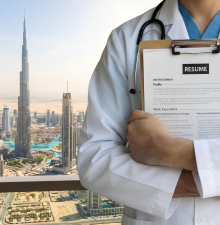
Dubai’s healthcare sector continues to expand rapidly, offering diverse career opportunities with attractive tax-free salaries and comprehensive benefits. From consultant specialists to nurses, allied health professionals, and healthcare IT experts, Dubai’s healthcare market rewards qualified professionals with competitive compensation, averaging AED 12,000–110,000 monthly depending on specialization and experience. With an 8% CAGR, mandatory health insurance, and robust digital health adoption, the emirate presents exceptional long-term growth prospects for healthcare workers.
Dubai’s Current Healthcare Job Market Overview
Dubai has positioned itself as a global healthcare hub, driven by:
- Population growth and rising chronic disease prevalence
- Mandatory health insurance policies
- Rapid digital transformation and telemedicine integration
- A growing medical tourism sector
Healthcare spending in Dubai has doubled over the last decade, supporting an 8% annual growth rate. The demand for specialist physicians—particularly in oncology, cardiology, and intensive care—is surging, while digital health expertise is increasingly valued. The Dubai Health Authority (DHA) has streamlined licensing and verification processes, making it easier for international professionals to join the workforce.
Top Healthcare Positions and Salary Ranges
Physicians and Specialists
Role | Monthly Salary (AED) | Notes |
Consultant Specialist | 80,000–110,000 | Private sector & medical tourism demand |
General Practitioner | 25,000–40,370 | Public and private hospitals |
Cardiology Specialist | 35,000–90,000+ | Western credentials may increase pay by 15–25% |
Specialists with international qualifications or advanced training often command premium salaries. Private sector roles generally offer higher compensation than public hospitals.
Nursing Careers
Dubai’s nursing sector offers diverse roles and competitive packages:
- Average RN salary: AED 185,100 annually
- Homecare & telehealth nurses: AED 4,500–6,500 monthly
- Supervisory positions: AED 15,000+ monthly
- Nurses with MSc degrees: AED 246,200 annually
Benefits typically include housing allowances, health insurance, annual flights, and tax-free income. Multicultural teams and modern facilities enhance professional growth.
Allied Health Professionals
Allied health professionals—physiotherapists, occupational therapists, speech therapists, dietitians, psychologists—earn AED 12,000–25,000 monthly, with private sector salaries often higher.
Requirements:
- Bachelor’s degree and 3+ years of experience
- DHA licensing and local registration
- Multidisciplinary collaboration and cultural adaptability
Digital health and telemedicine roles are creating additional growth opportunities for allied health professionals.
Healthcare IT and Digital Health Careers
Digital transformation is fueling demand for healthcare IT specialists:
Role | Experience | Annual Salary (AED) |
CTO | Senior | 600,000–1,200,000 |
IT Director | Mid-Senior | 232,641–422,265 |
Software Engineer | Entry–Mid | 100,000–431,995 |
Key skills include Python, SQL, R, EMR systems, and healthcare data standards. The sector sees 4.1% annual salary growth, with AI and telemedicine driving rapid expansion.
Factors Influencing Healthcare Salaries in Dubai
- Experience and specialization: Advanced specialties earn significantly more
- International credentials: Western training can increase pay by 15–25%
- Facility and location: Working in premium hospitals or affluent districts can boost salaries by 20–30%
- Digital health expertise: Professionals with IT skills see higher earning potential
- Contract type: Full-time positions often come with multi-year incentives
Continuous professional development, leadership roles, and international accreditation also correlate with higher compensation packages.
Benefits and Perks
Dubai’s healthcare sector provides comprehensive benefits that enhance quality of life:
Benefit | Details |
Health Insurance | Inpatient co-pay max AED 500; outpatient max AED 100 |
Digital Health Access | AI diagnostics, telemedicine, blockchain records |
Professional Growth | CME courses, global conferences, skill certification |
Wellness Programs | Fitness incentives, lifestyle & preventive care initiatives |
These perks, combined with tax-free salaries, make Dubai a highly attractive destination for healthcare professionals worldwide.
Career Growth and Advancement

Dubai offers structured career pathways supported by:
- Residency, fellowship, and mentorship programs
- Digital health and AI-based training opportunities
- Emiratization initiatives promoting UAE nationals into leadership
- Talent pools and job-matching platforms for specialized medical roles
Cross-functional collaboration and digital health expertise enhance mobility into executive, administrative, and AI-driven healthcare roles.
Healthcare Licensing Requirements in Dubai
To work legally, healthcare professionals must:
- Create a Sheryan account and complete the self-assessment
- Submit documents for Primary Source Verification (PSV) via DataFlow
- Pass a Computer-Based Test (CBT) and any specialty-specific assessments
- Provide a job offer letter from a DHA-approved facility
- Submit Emirates ID, residency visa, and finalize license activation
Documentation needed:
- Medical degree and transcripts
- Professional license and Good Standing Certificate
- 2+ years post-graduate clinical experience
- Passport and recent photos
- DHA application forms and CV
- Certified translations for non-English documents
The entire process may take 3–6 months, including PSV verification, exams, and visa processing.
Frequently Asked Questions
1. How long does it take to secure a healthcare job in Dubai?
3–6 months, including licensing exams, DataFlow verification, and visa processing.
2. Are there age restrictions?
No legal limit, but insurance requirements effectively restrict most employment to under 64 years. Professionals 65+ may need additional medical documentation.
3. Can families relocate during probation?
Yes, provided minimum salary and housing requirements are met, along with health insurance coverage.
4. Which hospitals offer specialized training programs?
DHA, MBRU, Dubai Hospital, and private hospitals like Mediclinic, Aster, and NMC provide structured internships, residencies, and fellowships.
5. Is Arabic proficiency mandatory?
Not for all roles. English is the primary language; Arabic is preferred for direct patient care roles.