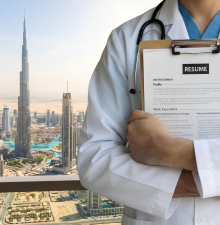
Dubai’s healthcare sector is set for unprecedented growth in 2025, fueled by AI-powered diagnostics, precision medicine, and digital transformation. With a projected 9.5% annual expansion, the market offers robust investment opportunities across pharmaceuticals, medical devices, medical tourism, and home healthcare services. The city’s medical tourism market, expected to reach USD 722.5 million, and the home healthcare market, projected at USD 967.6 million by 2030, signal significant career and business potential.
Digital Healthcare Transformation and AI Integration
Dubai is rapidly adopting AI-driven healthcare solutions to enhance clinical outcomes:
- Predictive analytics and real-time data are enabling personalized treatment plans
- IoT and wearable devices support proactive monitoring, particularly for chronic disease management
- Smart hospital initiatives streamline administrative workflows, optimize resources, and improve patient experiences
The Dubai Health Authority (DHA) Smart Health Strategy is accelerating adoption of AI and digital tools across hospitals, clinics, and telehealth platforms, positioning Dubai as a regional hub for innovative healthcare delivery.
Healthcare Investment and Economic Growth
Dubai’s healthcare market is attracting significant foreign direct investment and domestic capital:
- Pharmaceutical market projected to exceed USD 5 billion by 2025
- Medical device sector expected to reach AED 5.6 billion
- Infrastructure expansion supported by over 150 hospitals and 5,000+ healthcare facilities
- Telemedicine and smart health solutions rapidly expanding
The UAE’s high per capita healthcare spending (USD 1,200) and the availability of 75 insurance providers create a stable environment for investment and workforce growth.
Medical Tourism Excellence
Dubai continues to solidify its position as a medical tourism powerhouse:
- AED 2.3 billion generated from health travelers in 2023
- 691,000 international medical tourists in 2023; projected 500,000 by 2030
- Specialized treatments in orthopedics, cardiology, and elective procedures
- Personalized care plans supported by AI diagnostics and Dubai Health Experience (DXH) services
The city attracts a diverse international audience: 33% Asian tourists, 28% GCC/Arab, 23% European/CIS, with women representing 58% of patients.
Home Healthcare Services Expansion
Dubai’s home healthcare sector is expected to reach USD 967.6 million by 2030, driven by:
- Digital monitoring platforms and AI-powered remote care
- Rising demand for geriatric, post-operative, and chronic disease care
- Mandatory health insurance rollouts expanding workforce coverage
- 65% of seniors preferring in-home services over clinical visits
The sector’s rapid growth is creating substantial demand for care workers, physiotherapists, nurses, and multilingual healthcare staff.
Health Insurance Market Dynamics

Dubai’s health insurance sector is evolving to support rising demand and digital adoption:
- Premiums projected to increase 10–15% in 2025
- 62 insurers operating, with 61% controlled by international providers
- Digital insurance platforms improving policy accessibility, claims processing, and AI-based risk assessment
- Cross-border coverage options expanding to serve Dubai’s 80% expatriate population
Mandatory employer coverage, enhanced corporate plans, and tech-enabled claims management are creating opportunities for healthcare insurance providers and digital InsurTech solutions.
Infrastructure Development and Modernization
Dubai is investing AED 118 billion in healthcare infrastructure by 2027:
- Construction of 3 new hospitals and 33 primary healthcare centers by 2033
- AI-driven diagnostics reducing errors by 40% and shortening treatment wait times by 50%
- Specialized centers of excellence in underserved areas like Al Yalayis and Al Awir
- Blockchain-powered patient data management ensuring privacy and interoperability
Public-private partnerships (PPP) are enabling revenue-sharing models, smart health technology integration, and risk-sharing arrangements, creating lucrative investment opportunities.
Regulatory Framework and Market Stability
Dubai maintains a robust regulatory environment to ensure safety and compliance:
- Law No. 5 of 2025 – Public health measures
- Federal Law No. 6 of 2023 – Licensing standards
- DHA policies enforce privacy, cybersecurity, and mandatory health insurance compliance
- Fines for non-compliance: AED 500,000 for individuals, AED 1,000,000 for organizations
This regulatory clarity ensures stability for investors, healthcare providers, and international professionals.
Frequently Asked Questions
1. What qualifications are needed for international healthcare professionals?
- Bachelor’s degree with UAE credential validation
- DHA licensing through Prometric exam and Sheryan Portal registration
- Minimum 2 years post-qualification experience
2. How does seasonal weather affect medical tourism?
- Peak visits: November–March
- Reduced summer demand due to high temperatures (40°C+)
3. What are the licensing requirements for new healthcare facilities?
- Appointment of a licensed Medical Director
- DHA approval, trade license, NABIDH compliance, and infrastructure inspection
4. Which healthcare specialties have the highest demand-supply gap?
- Mental health, genomics, AI-driven diagnostics, preventive care, and lifestyle medicine
5. How do Dubai’s healthcare costs compare globally?
- Generally lower than Singapore, London, and New York for consultations
- Private sector dominates with 48% of total spending