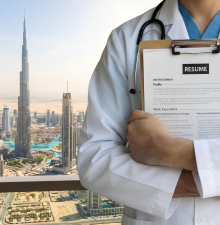
Specialist healthcare professionals are central to Dubai’s rapidly growing medical sector, with their workforce expanding 50% since 2019. These experts operate across critical care, aesthetic medicine, surgical units, and advanced medical technology platforms. Dubai’s AED 118 billion healthcare investment has created diverse opportunities for specialists, from ICU practitioners to cosmetic surgeons, reinforcing the emirate’s position as a global healthcare hub.
Dubai’s Expanding Healthcare Workforce: Key Statistics
Dubai’s healthcare workforce has surged from 39,548 professionals in 2019 to 58,788 in 2023, reflecting remarkable growth.
Key segments include:
- Physicians: 13,082 professionals
- Dentists: 4,071
- Nurses and midwives: 22,960
- Allied health professionals: 18,407
The DHA Opportunities Platform streamlines recruitment, connecting facilities directly with qualified specialists. In 2023 alone, 904,646 new professional registrations were processed, supporting Dubai’s transition into a progressive medical hub.
High-Demand Specialties for Specialist Professionals
Dubai’s healthcare sector shows rising demand in both critical care and aesthetic medicine:
- Critical care roles: Cardiac, trauma, and pediatric ICU specialists
- Aesthetic medicine: Dermatology, plastic surgery, and minimally invasive procedures with salaries exceeding AED 100,000 monthly
The region’s emphasis on preventive care also boosts opportunities for primary care physicians and internal medicine specialists. Dubai’s Vision 2030 healthcare initiatives are driving continuous investments in infrastructure and professional development.
Critical Care Services: Meeting Growing Demand
Intensive care needs are increasing due to Dubai’s aging population and the medical tourism surge (691,000 visitors in 2023).
Key projections include:
Service Area | 2018 Status | 2030 Projection |
ICU Beds | 629 beds | Deficit 279 beds |
Emergency Bays | +158 surplus | Deficit 61 |
Operating Theaters | +13 surplus | Deficit 136 |
Specialists in cardiology, geriatrics, and trauma care will be critical as demand for acute beds and ICU services grows.
Aesthetic Medicine: A Booming Sector
Dubai’s medical aesthetics market is projected to grow from $402.4 million in 2024 to $736.5 million by 2030.
Opportunities exist in:
- Cosmetic dermatology
- Plastic surgery
- Non-invasive procedures like Botox, dermal fillers, and laser treatments
With patients from 64 countries, specialists must deliver high-safety, advanced treatments, keeping skills current through masterclasses, international congresses, and clinical training.
Infrastructure Development & AI Integration

Dubai’s AED 118 billion investment has transformed healthcare delivery through state-of-the-art facilities and AI-driven innovations:
- Dubai Healthcare City: 1 million square meter free zone with medical towers, research centers, and patient-friendly transport
- AI integration: Reduces diagnostic errors by 40% and treatment wait times by 50%
- Virtual health assistants: Support specialist decision-making and predictive analytics
Public-private partnerships and smart facility design ensure world-class care, sustainable operations, and enhanced patient experiences.
Digital Healthcare Transformation
Dubai has embraced digital healthcare solutions, including:
- AI-powered diagnostics and predictive analytics
- Telemedicine platforms reducing hospital visits by 30%
- Blockchain for secure patient records
- IoT devices for real-time monitoring
- Digital twins for hospital resource management
These innovations create efficient, patient-centered care while supporting specialists in delivering high-quality services.
Medical Tourism Driving Specialist Demand
Medical tourism in Dubai is a key growth driver, attracting 674,000 international patients in 2022.
Key trends include:
- High-tech care (robotic surgery, AI diagnostics, telemedicine)
- Women’s health services catering to 58% of international patients
- Transparent pricing and global-standard procedures
Specialists benefit from tax-free income, exposure to international patients, and opportunities for clinical innovation.
Regulatory Framework & Quality Standards
Dubai’s Unified Licensing system (2024) simplifies practice across emirates:
- DHA audits and standardized evaluations ensure quality
- Mandatory patient data protection and compliance programs
- Continuous quality improvement and adherence to international clinical guidelines
Non-compliance can result in fines, license suspension, or revocation, maintaining high standards of specialist care.
Frequently Asked Questions
1. Average Working Hours:
Specialists typically work 40–48 hours/week, with private practice ranging from 25–85 hours, including rotating shifts and on-call duties.
2. Credential Transfer for Foreign Specialists:
Submit your medical degree, internship, and two years of experience to DHA, complete Dataflow verification, pass the DHA exam, and provide a Good Standing Certificate. Processing takes 3–6 months.
3. Language Requirements:
English proficiency is mandatory (TOEFL, IELTS, OET, or Cambridge), with exemptions for English-educated or UAE-practiced professionals. Arabic proficiency is advantageous.
4. Continuing Education:
Specialists must complete CME/CPD credits for license renewal. Requirements vary by specialty.
5. Mental Health Support:
Dubai provides confidential counseling, stress management, and burnout prevention for healthcare specialists, with services accessible via private clinics and integrated healthcare centers.