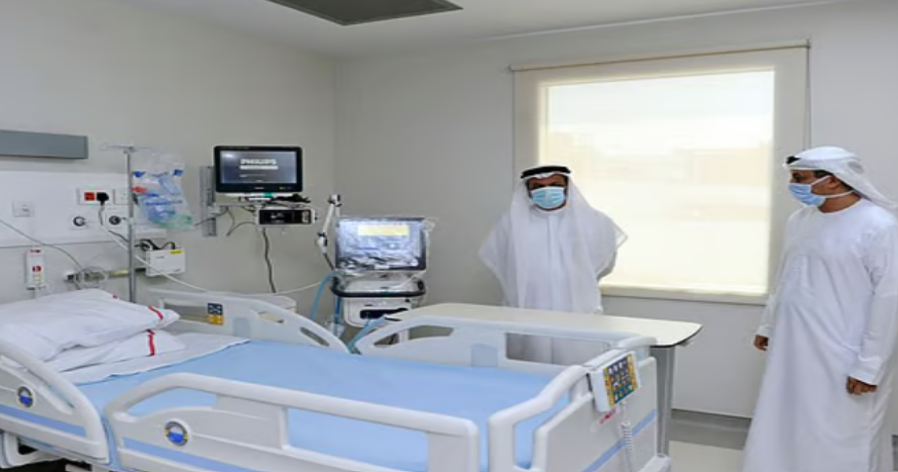
Dubai’s healthcare system in 2025 operates under a two-tier model of public and private facilities, governed by the Dubai Health Authority (DHA). Mandatory employer-sponsored insurance ensures access to consultations, emergency care, and chronic disease management, starting at AED 320 annually. The system integrates AI diagnostics, telemedicine, blockchain, and IoT-enabled smart hospitals, supporting over 691,000 medical tourists annually and maintaining JCI-accredited standards that rival top global destinations.
Public vs. Private Healthcare: Two-Tier Structure
Dubai’s healthcare operates through public hospitals serving primarily Emiratis with subsidized care and private facilities catering mostly to expatriates. Both sectors fall under unified DHA oversight and adhere to international standards:
- Public hospitals: Focus on emergency care, long-term treatments, and universal access
- Private hospitals: Emphasize specialist care, shorter wait times, and multilingual patient services
Digital health platforms such as NABIDH, Riayati, and Wareed connect hospitals, clinics, and providers, streamlining patient data sharing and improving care continuity. Private facilities contribute 48% of healthcare funding, while public hospitals safeguard essential services. The system ensures primary, specialist, and emergency care coverage across both sectors.
Mandatory Health Insurance in Dubai

In 2025, all private sector employees must have employer-sponsored health insurance, covering:
- Consultations and specialist visits
- Diagnostics and chronic disease management
- Emergency and telehealth services
Employers cannot deduct premiums from salaries, and non-compliance penalties range from AED 500 to AED 150,000. Coverage extends to domestic workers, and pre-2024 employees must enroll upon permit renewal. Additional medical documentation is required for retirees. This system guarantees comprehensive, standardized coverage for residents while maintaining regulatory compliance monitored by DHA and MOHRE.
Digital Healthcare Innovations Transforming Patient Care
Dubai has leveraged cutting-edge digital technologies to enhance healthcare delivery:
Innovation | Patient Benefit |
AI Diagnostics | 30% faster disease detection |
Telemedicine | Real-time virtual consultations |
Blockchain Records | Secure, cross-provider medical data |
Smart Hospitals | Reduced waiting times and optimized care |
IoT & Wearables | Continuous remote patient monitoring |
Smart hospitals use AI-assisted surgery and predictive analytics, while telehealth platforms allow 24/7 patient access, improving outcomes and operational efficiency.
Economic Investment & Cost Management
Dubai’s AED 118 billion healthcare investment in 2025 underpins public and private sector growth.
Key financial highlights include:
- Private sector contributes 48%, government 39%
- Healthcare costs rising 12% regionally, out-of-pocket payments up 3%
- Law No. 5 of 2025 ensures mandatory insurance compliance and financial sustainability
This investment supports digital transformation, medical infrastructure expansion, and Dubai’s position as a global healthcare hub.
Medical Tourism & International Standards
Dubai attracts over 691,000 medical tourists annually, generating AED 1.03 billion in revenue.
Key features of the medical tourism ecosystem include:
- JCI-accredited facilities offering advanced treatments
- Personalized concierge services and culturally sensitive care
- Wellness and integrated medical tourism packages across 15 luxury resorts
- Patients from Asia (37%), GCC/Arab region (31%), and Europe (15%)
Dubai’s hospitals provide high-quality care at competitive pricing, leveraging AI diagnostics, robotic surgery, and telemedicine to maintain global standards. Medical tourism revenue is projected to reach USD 889.97 million by 2032.
Frequently Asked Questions
1. What Are Typical Waiting Times for Specialist Appointments?
Specialist appointments typically take 1–4 weeks. Private clinics often offer 1–7 day availability, while public hospitals may exceed 2 weeks. AI scheduling and predictive analytics help reduce delays.
2. Are Healthcare Services Available for Visitors Without Residency Visas?
Visitors can access emergency care at all hospitals. Non-emergency visits require upfront payment; short-term travel insurance starting at AED 320 is recommended.
3. Are Alternative Medicine Treatments Covered by Insurance?
No. Standard mandatory insurance plans exclude alternative therapies, which require supplementary coverage.
4. How Are Emergency Medical Evacuations Handled?
International medical evacuations require pre-approval from a receiving hospital, coordination with DHA and Civil Defence, and suitable insurance coverage.
5. What Mental Health Services Are Available?
Dubai provides multilingual mental health services through 15 specialized clinics. Services include culturally sensitive counseling, therapy sessions, and crisis intervention, with care documented via NABIDH.