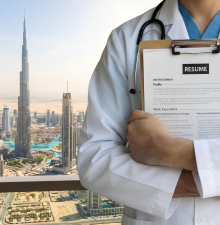
Explore Dubai’s healthcare system in 2025. Learn how UAE citizens, private insurance holders, tech-savvy urban residents, and low-income communities benefit from world-class facilities, AI-driven diagnostics, telemedicine, and subsidized care.
Understanding Dubai’s Three-Tier Healthcare System
Dubai’s healthcare system is structured to serve three key beneficiary groups with tailored access and benefits.
You’ll find:
1. UAE citizens receiving government-funded public healthcare with zero out-of-pocket costs and priority treatment
2. Private insurance holders accessing over 130 facilities with annual copays capped at 1,000 AED
3. Tech-savvy urban residents leveraging AI-driven diagnostics, telemedicine, and digital health platforms for specialized care
This strategic structure ensures population-specific healthcare delivery, combining quality, affordability, and technology.
Premium Access for UAE Citizens
Dubai provides UAE citizens with full public healthcare coverage, ensuring:
- Free general examinations, diagnostic tests, prescribed medications, and physiotherapy
- Immediate access to emergency care and specialized units without cost barriers
- Preventive care, maternal services, and high-standard facilities comparable to private hospitals
With Emiratis representing only 15% of Dubai’s population, the government-funded system prioritizes efficiency, quality, and rapid access, aiming for a 3-6% annual growth in medical facilities.
Tech-Enabled Urban Healthcare
Dubai’s urban residents benefit from advanced technological integration, including:
Technology | Benefit |
Digital Appointment Systems | 24/7 booking, reduced wait times |
AI Health Assessments | Personalized preventive care plans |
Smart Clinic Networks | Continuous care in high-density areas |
Through AI diagnostics, IoT-enabled monitoring, and mobile health apps, patients experience streamlined healthcare delivery, reduced wait times, and predictive outpatient management. Telehealth expansion is projected to generate AED 853 million in market value, addressing urban care demands effectively.
Private Insurance Holders: Affordable Access to Quality Care
Mandatory private health insurance (ISAHD) has transformed expatriate healthcare, lowering out-of-pocket costs from over 20% to under 12%.
Key benefits include:
- Access to 130+ private facilities with specialized care and shorter wait times
- Annual copayments capped at 1,000 AED
- Extensive coverage for outpatient care, pharmacies, and elective procedures
Private insurance now accounts for 47% of total healthcare expenditure, funding both hospital (49%) and clinic (28%) services. Employers provide coverage for expatriates, while international insurance may be needed for dependents.
Sovereign Investment Enhancing Patient Care

Sovereign wealth funds (SWFs) have strengthened Dubai’s healthcare system by:
- Supporting local pharmaceutical manufacturing to reduce medicine costs
- Accelerating AI diagnostics and telemedicine adoption
- Funding healthtech startups for chronic disease management
GCC SWFs manage nearly USD 4 trillion, strategically invested in healthcare infrastructure, renewable energy-powered facilities, and advanced patient care solutions.
Low-Income Support and Community Programs
Dubai offers subsidized healthcare programs for low-income residents:
- Out-of-pocket expenses dropped from 25% (2014) to 12% (2018)
- ISAHD coverage ensures universal access
- Maternal mortality reduced to 8 deaths per 100,000 live births
Community prevention programs include vaccination campaigns, workplace wellness, and chronic disease education. Telemedicine initiatives extend access to rural and underserved areas, improving care for diabetes, cardiovascular patients, and the elderly.
Public-Private Healthcare Integration
Dubai has achieved 98% healthcare coverage through seamless integration of public and private sectors:
- AI-driven triage, digital diagnostics, and electronic medical records standardize care quality
- Public-private partnerships fund infrastructure and enhance access to specialized care
- Over 200 clinics in DHCC serve locals, expats, and medical tourists efficiently
Digital transformation ensures enhanced efficiency, reduced errors, and better patient outcomes, particularly for those adopting AI-powered solutions and blockchain-enabled medical records.
Frequently Asked Questions
1. How Can Medical Tourists Access Dubai Healthcare Without Residency?
Medical tourists can use DXH partnerships for visa processing, accommodation, and appointments. Telemedicine allows pre-visit consultations, and blockchain ensures secure, portable health records.
2. What Mental Health Services Are Available?
- Emiratis: Priority access at Al Amal Hospital with outpatient and specialized programs
- Private insurance holders: Multilingual psychologists and therapies like CBT
- People of determination and elderly: Dedicated clinical support
- Teletherapy available for all groups
3. Can Patients Choose Doctors Across Public and Private Networks?
Access depends on residency and insurance. Citizens primarily use public doctors but can request private referrals via Riayati, while expats are restricted to private networks. Digital platforms enable cross-network referrals when medically necessary.
4. How Are Emergency Services Coordinated Between Rural and Urban Areas?
Dubai’s 999 emergency system and National Ambulance Integration connect rural and urban facilities. Air ambulances and mobile ICUs extend coverage, supported by DHA’s Emergency Operations Plan and mutual aid agreements.
5. What Healthcare Options Exist for Visitors With Pre-Existing Conditions?
Visitors must evaluate insurance options carefully. Private international insurers may require health clearance. Without insurance, patients pay upfront; the Basic Health Insurance Package (AED 320/year) does not cover most pre-existing conditions.